

Leather sofa repair in Singapore can restore certain damaged surfaces without the need to completely change the sofa. Each kind of damage – cracks, peeling, tears and loss of colour- requires a different treatment. Minor surface damage is often repairable, while significant damage can make reupholstery a more viable option.
Leather is also susceptible to weathering in the climate of Singapore. With constant use, heat, moisture and lack of proper care, it can get damaged. Before ordering your leather sofa repair, find out the type of damage and how extensive it is.
What Causes Leather Sofa Damage?
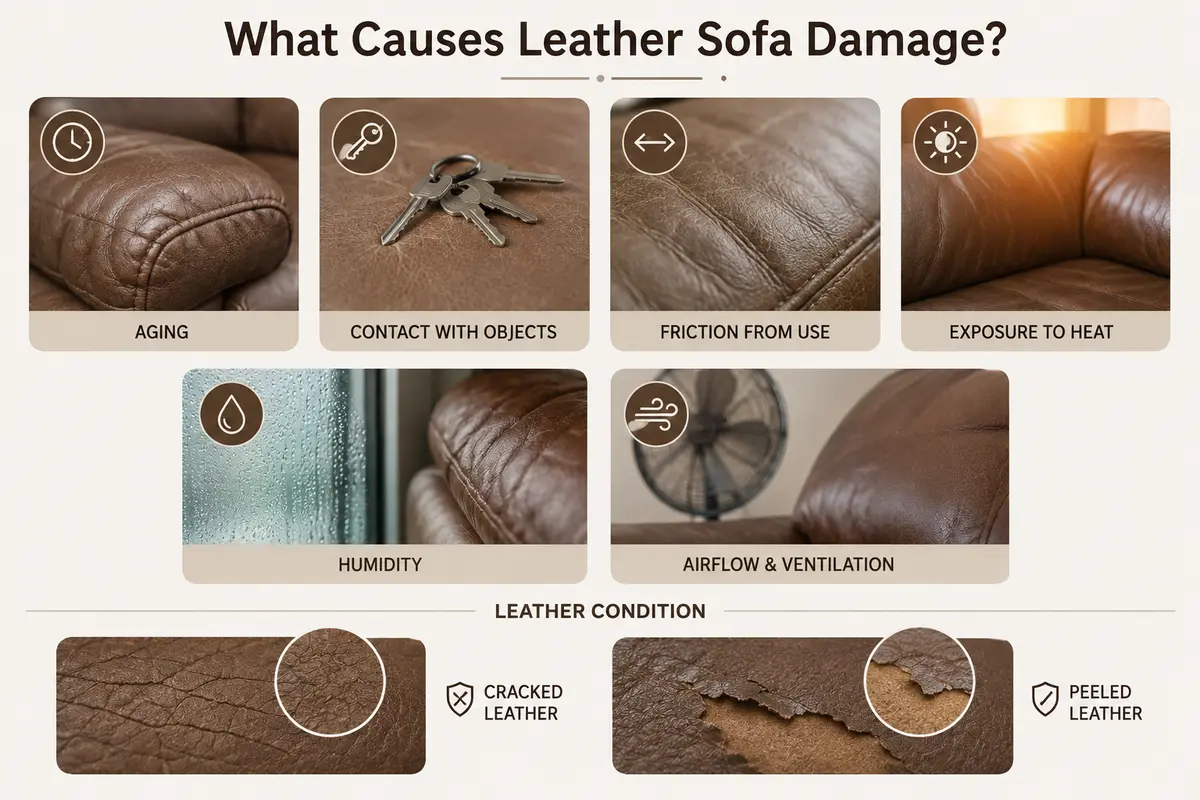
Leather can age and change its appearance and properties over time. Contact with objects and friction from everyday use and exposure to heat can damage the surface. Humidity could also be a contributing factor to the way a material feels or appears.
The state of the leather depends on the variety and finish, and how it has been looked after previously. Cracked leather can sometimes be surface damage, but peeled leather usually indicates a compromised top coat.
How Can You Identify Cracked Leather?
Cracks may also be a thin surface cut or split. They often can be found in the locations that get the most use, such as the seat cushion, armrests and backrest.
With leather sofa restoration, some light cracking may be fixable; any more prominent cracking should be examined closely. Do not continue to use badly cracked leather; this may worsen the sofa condition.
Can Peeling Leather Be Repaired?
Peeling is not the same as surface dryness. It can occur when the covering or bonded surface of a product starts to break or delaminate. Isolated areas can occasionally be rectified depending on the fabric and circumstances. Large-scale peeling is often more difficult to restore.
What About Tears and Cuts?
All tears must be considered according to their size, location and depth. A small tear in a healthy area may be repairable. Large tears may spoil the look and form of the upholstery.
The material around is important as well. Weaker or peeling leather might not support a repair as well as intact leather. An assessment of a leather sofa repair can advise on the best way to go about things.
Can Colour Loss Be Restored?
Colour can also fade or change unevenly due to sunlight, friction and general wear. The appearance of the surface can also be affected by stains and cleaning materials.
It is advisable to assess the extent of colour loss, the colour coat and the current colour before treatment. This can be useful in deciding between restoration or reupholstery.
How Does Singapore’s Humidity Affect Leather?
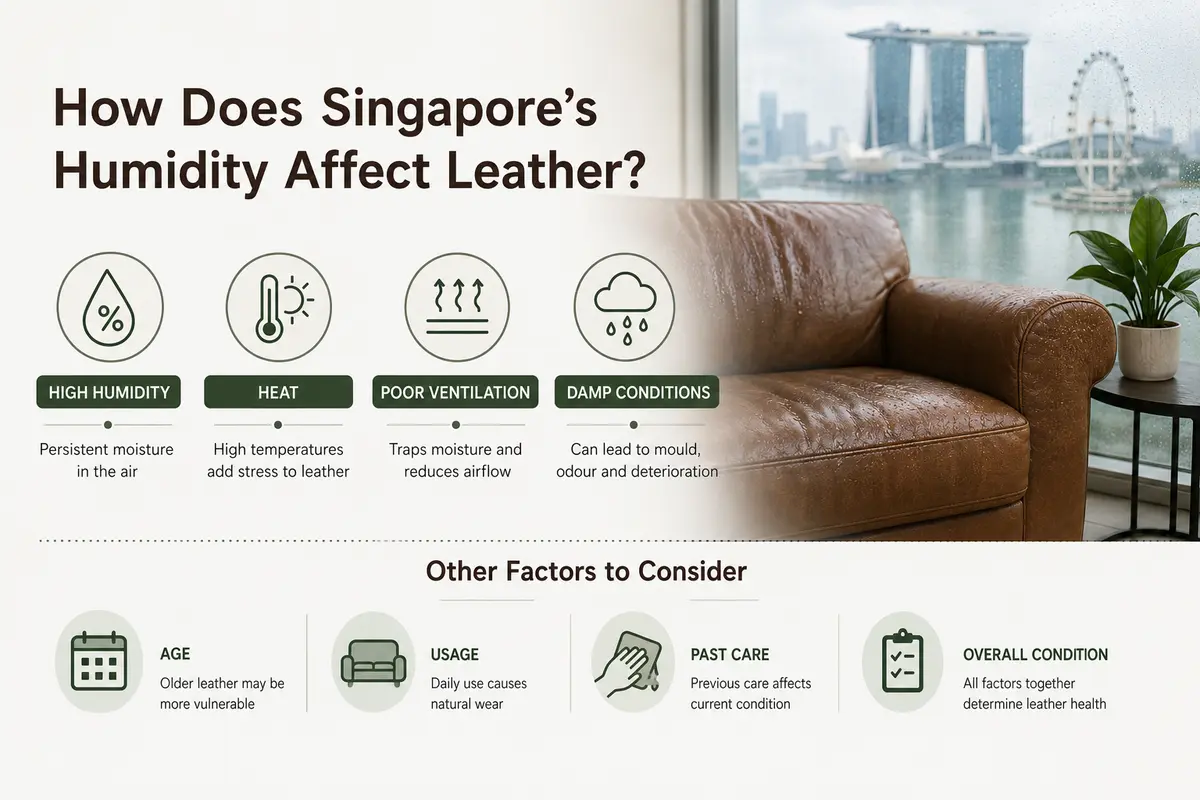
The humid climate of Singapore can make caring for leather more challenging. Humidity and heat can accelerate changes in leather when there is a lack of ventilation and the sofa in question is subjected to damp conditions. There are other aspects to take into account, together with climate, such as the age, usage and past care.
When Is Leather Sofa Repair Suitable?
Repairs may be possible provided the damage is not extensive, and the material environment is intact.
A repair may be suitable for:
- Small cracks
- Minor tears
- Localised surface damage
- Limited colour loss
- Small areas of wear
- Certain scratches or scuffs
The real condition should be checked prior to treatment.
When Is Reupholstery More Suitable?
Reupholstery could be an option if the damage is very extensive. Widespread peeling, widespread cracking or heavy degradation of upholstery is likely to make patch repairs quite difficult to maintain.
Consider the frame and internal structure of the sofa too. If it is still usable, a reupholstered piece of furniture can be put to another use rather than replacing it.
Repair or Reupholstery: What Should You Choose?
| Type of Damage | Possible Approach | What to Check |
|---|---|---|
| Small cracks | Repair or finishing | Depth and extent of cracking |
| Small tear | Local repair | Size and surrounding material |
| Minimal colour loss | Restored colours | Present finish and condition of leather |
| Peeling all over | Reupholstery may be considered | Condition of the upholstery |
| Cracking extensively | Reupholstery could be considered | Overall condition of the leather |
| Large tears | Repair or reupholstery | Damage to adjoining sections |
What Should You Check Before Calling for Repair?
Begin by inspecting the entire piece of furniture, not just one tear or bite. Observe all the parts that get used often, such as the seats, arms, backs, seams, and others.
Identify the nature of the damage and its location. Photos are also useful for providing information about the damage to for a sofa upholstery job.
Consider these points:
- Where the damage is located
- The magnitude of the impacted regions
- Whether the surface is peeling
- Whether it feels weak or dry
- Whether colour has changed
- Whether seams are damaged
- How old the sofa is
- Whether the damage is spreading
What Is Involved in Leather Sofa Restoration?
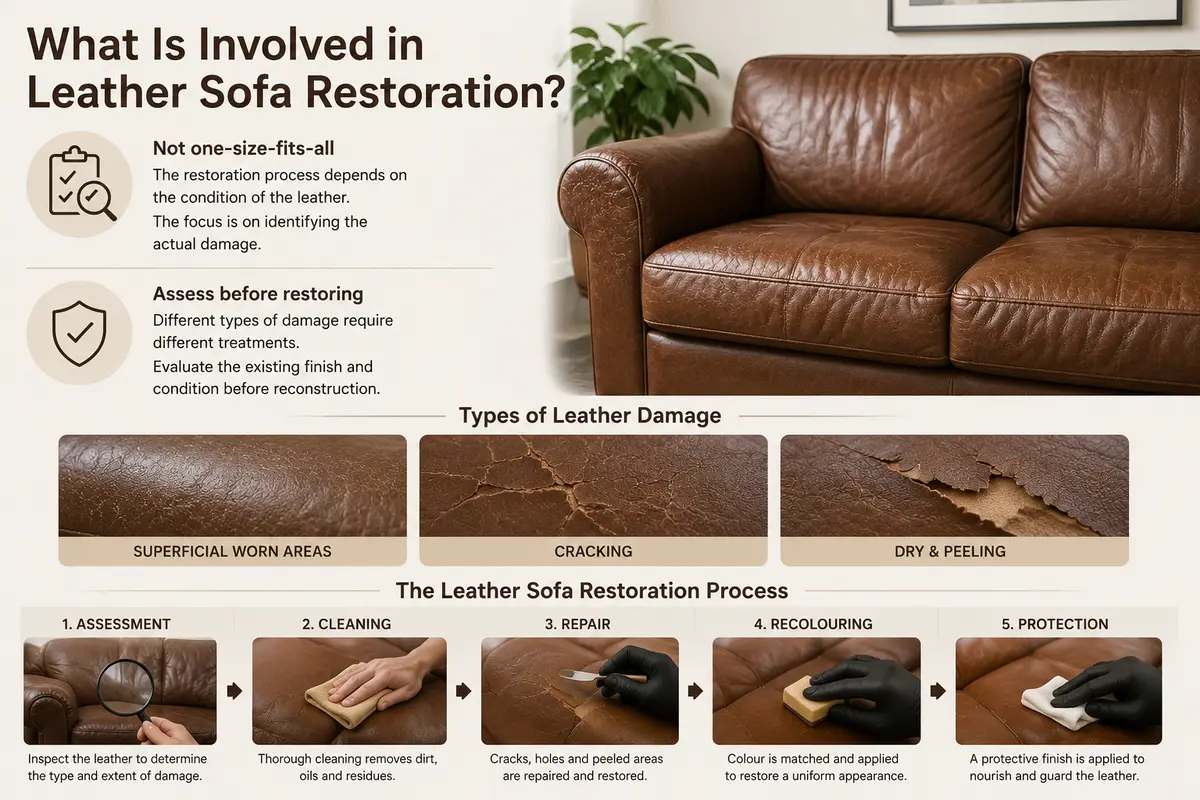
When it comes to leather sofa restoration, it’s not a one-size-fits-all approach. Depending on the condition of the material, the specific restoration process will vary. The focus is on determining what is actually damaged, not on using the same treatment for every type of sofa.
A surface that has superficial worn areas will respond differently to leather that is cracking, dry and peeling in parts of the hide. The existing finish and condition of the leather should therefore be evaluated before proceeding with reconstruction.
When Should You Consider Professional Assessment?
Think of a situation in which the damage continues to spread, or the covering is peeling over a large area, or you don’t know whether the leather can be repaired. Attempting to treat more severe damage without knowing the substrate may make the problem worse.
Once you have taken into account other factors, an assessment can help you decide whether to opt for sofa repair or reupholstery. The sofa’s current condition, damage and the finish you want are some considerations.
How Can Zmivins Help?
Here at Zmivins, we would be able to tell you the condition of your sofa and the type of damage that is done to the upholstery. This would allow us to know whether restoring or reupholstering your sofa would be more appropriate.
Our method begins with the sofa. Not all of the damages listed, such as cracks, peeling, tears and loss of colour, can be treated to the same degree. A careful evaluation allows us to know what can be treated and what will have to be replaced.
Give Your Leather Sofa the Right Treatment
Take a good look at the leather before you jump into any repair. You really need to know exactly what kind of damage you’re dealing with—don’t skip that step. Problems such as small surface cracks could have a different treatment than a heavy peel or a large tear.
Whether it is leather sofa repair or new upholstery, understand the actual condition of the material. It will help you to select the right option to treat your sofa.
No Comments