

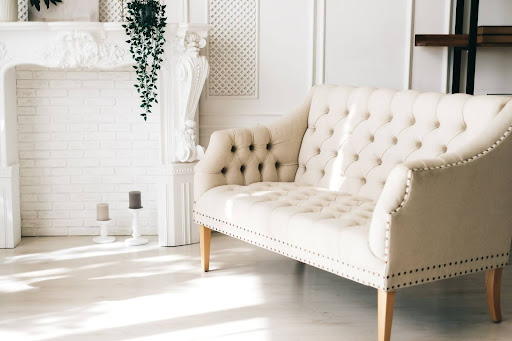
If you want to give your sofa a fresh new look, then figuring out how to calculate fabric yardage for a sofa project is a must. In any case, whether you are doing it yourself or a professional is hired to take care of the job, knowing the upholstery fabric yardage for sofas is a way of saving money and time at once. The main point of this wise but simple rule is an act of prevention — do your measurements twice and only then begin cutting. Such behaviour will not only make your work more precise, but also less wasteful and will lead to getting the perfect fit for your furniture.
Why Take Measurements Before Reupholstering?
Without considering and measuring, no upholstery project can be successful. Relying on rough guesses and skipping this step can lead to a shortage of material and, consequently, to an increase in the expenses for the sofa upholstery services, to a decrease in the overall effect and even to the disappointment of the customer. Accurate measurement helps to have enough fabric to cover every cushion, arm, and corner of your furniture with a little extra allowance for seams and pattern alignment.
Firstly, professionals measure carefully the different parts of a couch, like the seat, back, and armrests, one by one. The reason for this is that the size of the padding or frame may vary, and thus, each piece of furniture, even within one model, may be different.
The Fundamental Approach to Calculating Fabric Requirements for a Sofa
A simple formula can be used to calculate fabric yardage for a sofa reupholstery, thus helping to estimate the fabric necessary:
(Width × Height × Number of Sections) ÷ Fabric Width = Total Yardage Required.
Usually, fabric comes in widths of 54 inches, which corresponds to the standard for upholstery fabric. On the other hand, based on the style and the build of your sofa, this computation may require a little adjustment. Never forget to put in 10–15% more fabric than what you calculated to accommodate cutting errors, seams, or pattern alignment.
Average Fabric Requirements by Sofa Type
We can use these typical references to figure roughly how much upholstery fabric we will need for those common types of sofas, even if the actual fabric needed depends on our measurements:
| Type of Sofa | Average Fabric Needed | Description |
| Armchair | 6 – 7 yards / 5.5 – 6.5 metres | Single-seater armchair with comfortable padded arms. |
| Loveseat | 10 – 12 yards / 9 – 11 metres | Two-seater, with back, arms, and seat included. |
| 3-Seater Sofa | 14 – 18 yards / 13 – 16.5 metres | Full-size sofa, with all cushions and armrests included. |
These numbers alone can be viewed just as a starting point. The exact amounts of fabric needed may change depending on the thickness of the cushions, whether there is tufting or if the back and the sides are made of fabric as well.
Factoring in Fabric Patterns and Texture
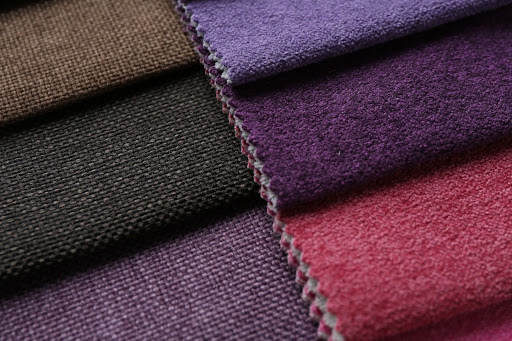
If you deal with patterned or textured upholstery fabric, then you will require some extra yardage for pattern matching. Pattern matching ensures that the designs on the cloth, such as stripes, floral, or geometric prints, line up correctly across the cushions and seams.
To keep a seamless look:
- For large patterns, add an extra 1–2 metres.
- Before buying, find the length of the pattern repeat by checking the label of the fabric roll.
- Work out the pattern direction on paper before cutting so that you will be able to match it.
Reupholstering professionals are usually very precise about these small details that they account for automatically, but self-help sofa reupholsterers should be on the safe side and confirm them before cutting.
Tips for Selecting the Perfect Upholstery Fabric
Choosing the right upholstery fabric is equally important as figuring out how much fabric you need. The material you pick will determine not only the visual aspect of the furniture but also how long it will last.
Here we offer some handy tips that will lead you to the right decision:
- Wear and tear-resistant fabrics such as polyester blends, microfibre, or leather should be chosen if the sofa is in a high-traffic area.
- If you want to add a bit of glamour, velvet and chenille can be great ideas, but remember that these fabrics will require you to be more careful.
- Once and for all, fabric samples should be tested before making a large purchase to confirm that both colour and texture fit your décor.
If you decide to ask a professional for sofa upholstery services, he or she will not only do the job but can also advise you on the most suitable fabric for your sofa.
How Do Professionals Accurately Measure Fabric Yardage?
Upholstery specialists in Singapore and worldwide are very thorough when they are working out how much fabric is needed for a sofa. The factors they consider are:
- The type of sofa and the number of cushions.
- Fabric width and repeat pattern.
- Cushion shape (box-style, T-cushion, or attached).
- Arm style and whether the back is tight or loose.
Besides having measurements of each piece, they also employ templates or mock layouts to see exactly where the cloth goes. So, the whole process is devoid of estimation and thus ensures that patterns are aligned, specifically, for luxury furniture pieces.
DIY vs Professional Upholstery Work
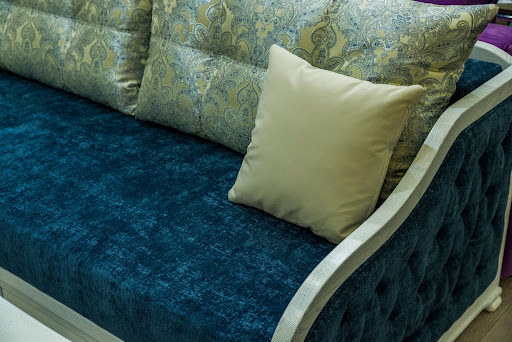
If you enjoy doing things yourself, figuring out the fabric needed for upholstering a sofa might make you feel good, though it requires patience and getting it right. Nevertheless, if there is an error in measurement or cutting, it can result in the wasting of fabric or getting a low-quality finish.
By sofa upholstery service professionals, the measurement, cutting, and sewing are done accurately, thus the décor of your furniture turns refined and durable. Moreover, professionals have the privilege of using special tools and can suggest the materials that would best suit your lifestyle.
Common Mistakes to Avoid When Measuring Fabric
It is easy to miscalculate fabric yardage, and many people do not realise that. Here are the mistakes you should not make:
- Not remembering to take into account more fabric for the seams and for matching the pattern.
- Measuring only those parts of the sofa which are visible.
- Not considering the shrinkage of the fabric after it has been cleaned or stretched.
- Purchasing fabric of incorrect width or orientation.
If you didn’t make these errors, the reupholstery process would be efficient and smooth without any unexpected situations.
Final Thoughts
Understanding how to calculate fabric needed for sofa reupholstery gives you the power to decide which route to take — whether to do it yourself or hire a professional sofa upholstery service. By figuring out how much upholstery fabric you need and then doing what is necessary, you not only save money but also give yourself the assurance that the work will be done with the least amount of waste and thus perfectly.
Remember the golden rule — measuring twice and cutting once. With accurate measurements, nice fabric, and diligent planning, your sofa will be capable of keeping its charm, comfort, and uniqueness, thus becoming the highlight of your living area once again.
Sorry, the comment form is closed at this time.